Modulation of Glycemic and Lipid Metabolic Pathways by Cucurbita maxima Fruit Parts in Streptozotocin-Induced Diabetic Rats
Aduloju, T. A. *
Department of Applied Biochemistry, Nnamdi Azikiwe University, Awka, Nigeria.
Ezekwesili-Ofili, J. O.
Department of Applied Biochemistry, Nnamdi Azikiwe University, Awka, Nigeria.
Oladejo, A. A.

Department of Applied Biochemistry, Nnamdi Azikiwe University, Awka, Nigeria.
Ajayi, O. O.
Department of Chemistry, University of Georgia, Athens, United State of America.
*Author to whom correspondence should be addressed.
Abstract
Background: Diabetes mellitus is a chronic metabolic disorder associated with hyperglycemia, dyslipidemia, and oxidative stress, which collectively contribute to long-term complications. Cucurbita maxima (pumpkin) is traditionally consumed as food and used in ethnomedicine for glycemic and lipid regulation. Although its bioactive constituents have shown antidiabetic potential, limited research has comparatively evaluated different fruit parts under diabetic conditions.
Objective: This study investigated the modulatory effects of the pulp, peel, seed, and their combinations of Cucurbita maxima on glycemic control, lipid metabolism, and antioxidant enzyme activities in streptozotocin (STZ)-induced diabetic Wistar rats.
Methods: Fifty-four rats were divided into nine groups and fed C. maxima–supplemented diets (pulp, seed, peel, or combinations) for the experimental period, with glibenclamide as the standard drug control. Diabetes was induced with STZ (50 mg/kg), and fasting blood glucose was monitored at 3-day intervals. At sacrifice, sera were analyzed for lipid profile-HDL, LDL, triglycerides, total cholesterol and antioxidant enzyme activities including superoxide dismutase (SOD), glutathione peroxidase (GPx), and catalase (CAT). Body weight changes were also assessed.
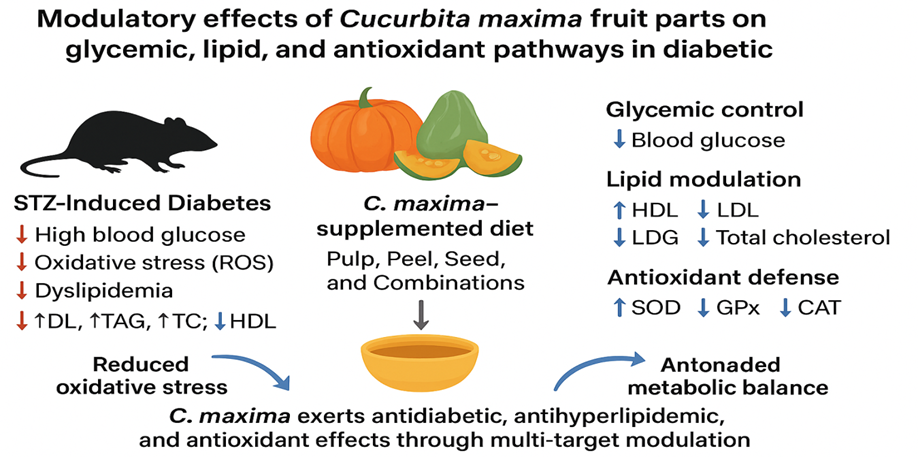
Results: Dietary incorporation of C. maxima fruit parts significantly reduced fasting blood glucose in all treated groups compared with the untreated diabetic control. A mild improvement in body weight was observed in C. maxima-fed rats. Antioxidant status improved markedly: SOD, GPx, and CAT activities were significantly elevated across treatment groups, with seed-based diets producing the highest SOD and GPx activities, while pulp and peel exhibited the strongest enhancement of catalase activity. Lipid modulation was substantial, as treated rats showed significantly increased HDL levels and reduced LDL, triglycerides, and total cholesterol relative to diabetic controls. Combination diets (pulp + seed, pulp + peel) demonstrated synergistic effects across glycemic, lipid, and antioxidant parameters.
Conclusion: Cucurbita maxima fruit parts; particularly the pulp, peel, and seed exert potent antidiabetic and antihyperlipidemic effects in STZ-induced diabetic rats. Their therapeutic actions appear to involve improved insulin response, modulation of lipid metabolic pathways, and restoration of endogenous antioxidant defense systems. The synergy observed in combined fruit-part diets highlights the value of whole-fruit utilization as a functional food strategy. C. maxima therefore represent a safe, affordable, and promising dietary adjunct for diabetes and dyslipidemia management.
GRAPHICAL ABSTRACT
Keywords: Cucurbita maxima, diabetes mellitus, dyslipidemia, antioxidant enzymes, functional foods, streptozotocin, metabolic modulation